


Great News! A research paper from the School of Artificial Intelligence, Tianjin University of Science and Technology, has been awarded the
From August 5 to 8, the 20th International Conference on Intelligent Computing (ICIC 2024), hosted by Ningbo East University of Technology (tentative name) and organized by Tianjin University of Science and Technology, was held in Tianjin.
With the theme "Intelligent Computing Leads the Future", the conference gathered more than 500 scholars and industry professionals from around the world in Tianjin. Extensive academic discussions and exchanges were conducted on topics including Evolutionary Algorithms and Optimization, Computational Intelligence and Data Processing, Emerging Technologies and Applications, Machine Learning and Pattern Recognition, Data Mining and Knowledge Discovery, Intelligent Computing and Natural Language Processing, Intelligent Control and Expert Systems, Genomics and Gene Expression, Proteomics and Protein Structure, Biological Data Analysis and Mining, and Bioinformatics. The event aimed to promote academic exchanges in fields such as artificial intelligence, pattern recognition, evolutionary computation, informatics theory and applications, computational neuroscience and bioscience, soft computing, and human-computer interaction, and to advance scientific research and industrial development in the field of intelligent computing. Both the number of submissions and accepted papers for ICIC 2024 reached a record high, with over 800 outstanding papers selected for publication from more than 2,000 submissions. Among more than 500 oral presentation papers, 5 were awarded Best Oral Presentation Papers, and 2 Excellent Papers were selected from over 60 poster presentation papers. The selection of excellent papers follows a complete process from call for papers, screening, review to recognition and publication, aiming to discover and commend innovative and practical research achievements in the field of intelligent computing.
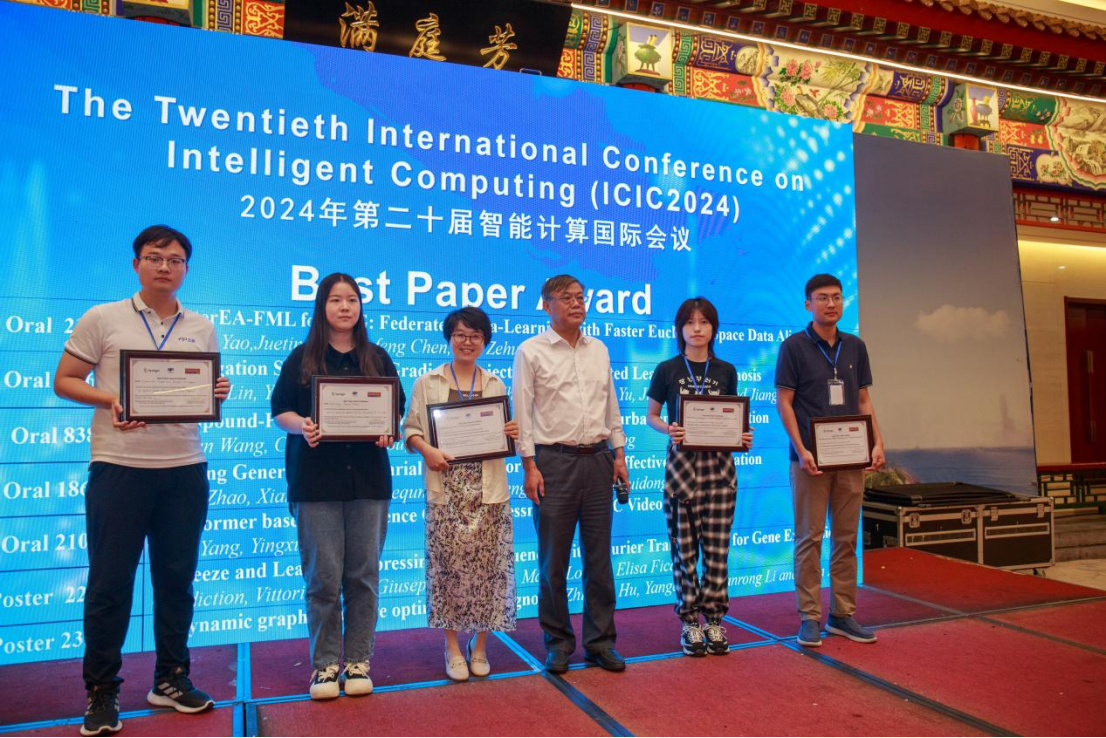
Research teams from the School of Artificial Intelligence of Tianjin University of Science and Technology published multiple papers at ICIC 2024. Among them, one oral presentation paper Conformer based No-reference Quality Assessment for UGC Video (Authors: Zike Yang, Yingxue Zhang, Zhanjun Si), co-authored by Yang Zike and her supervisor, and one poster paper A Dynamic Graph Structure Optimization Diagnosis (Authors: Zhiyuan Hu, Yangde Lin, Jianrong Li and Juan Lyu), co-completed by Hu Zhiyuan, his team members and supervisors, won the Best Paper Awards at ICIC 2024.
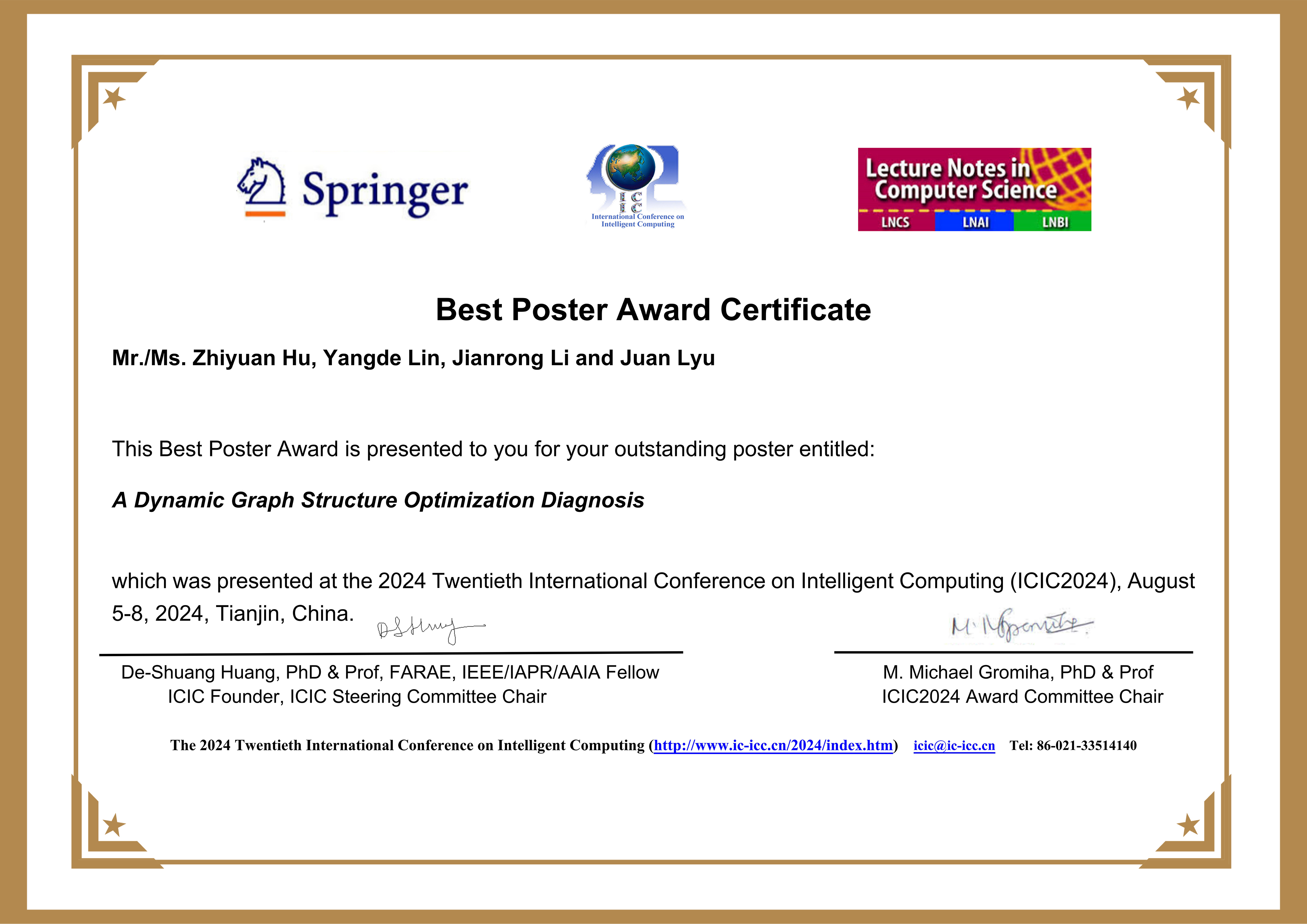
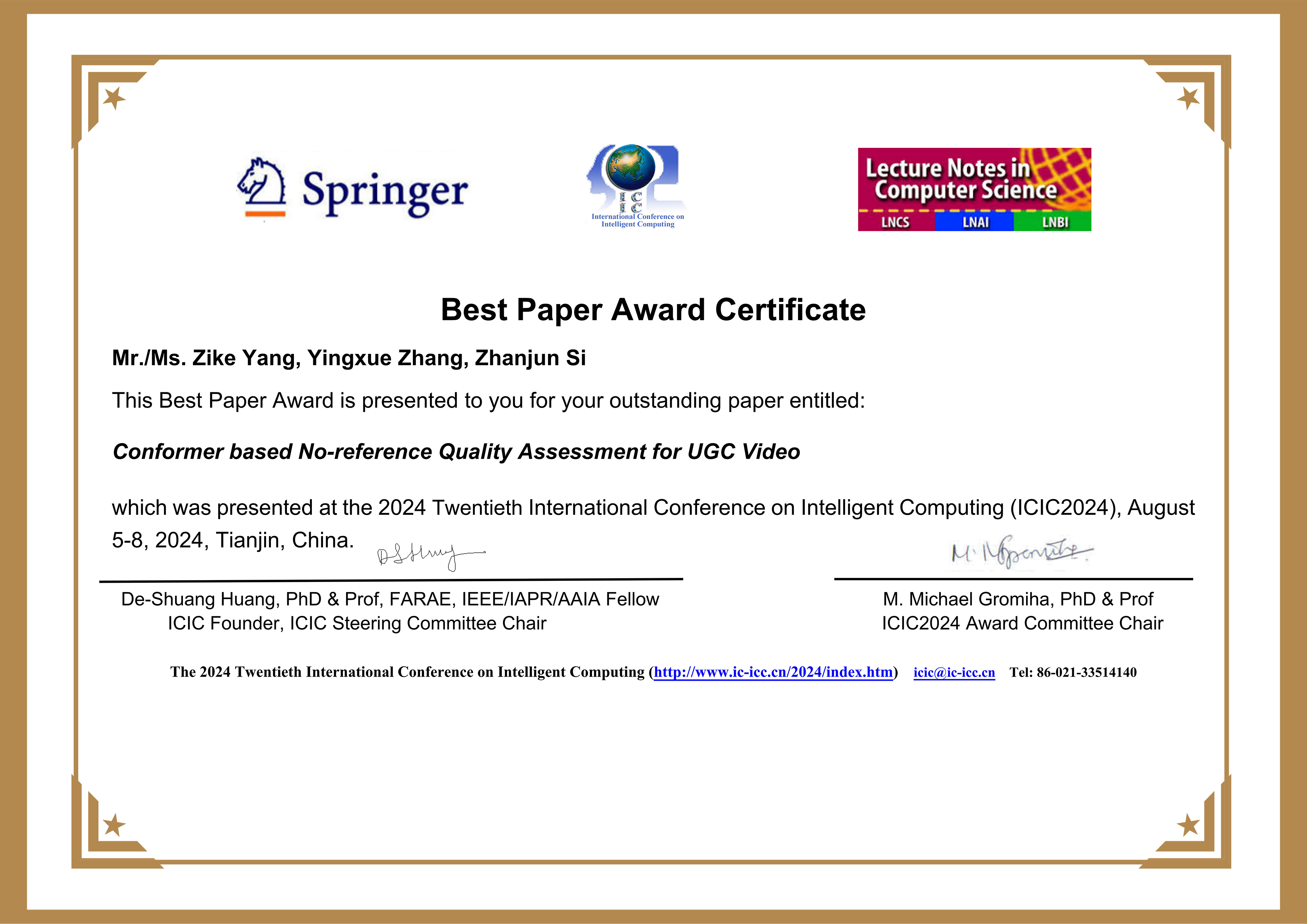
Yang Zike is a female master's student of Electronic Information major (Grade 2023) in the School of Artificial Intelligence, Tianjin University of Science and Technology. Supported by Tianjin University of Science and Technology's "Pioneer Plan", she actively participated in various academic activities and visited relevant enterprises, which provided effective support for her topic selection and research advancement.
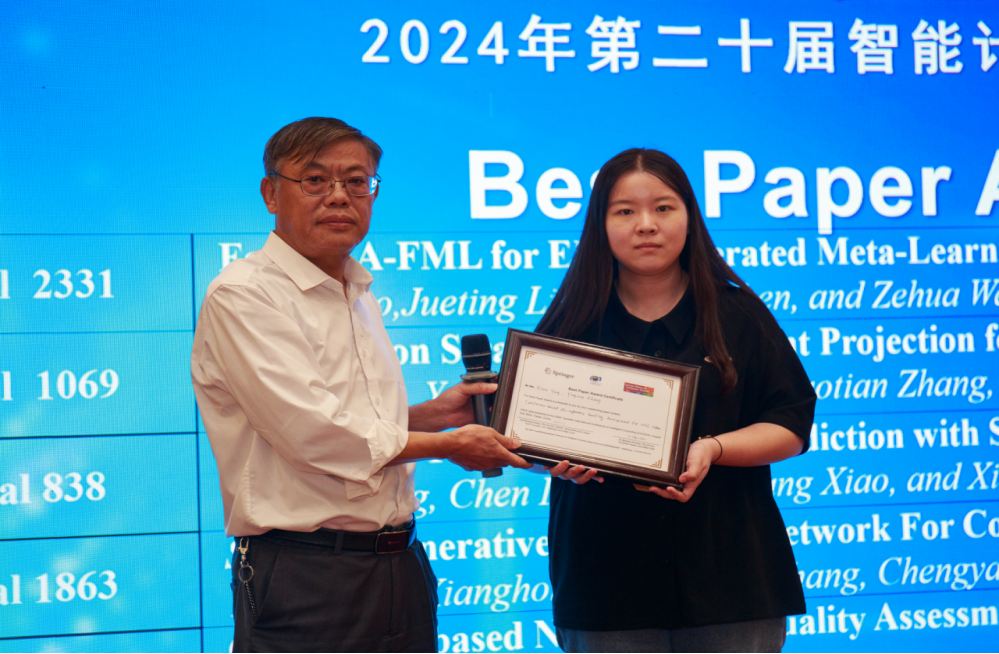
UGC (User-Generated Content) videos in this paper refer to video content created, filmed and shared on online platforms by ordinary users. With their unique authenticity and diversity, they are highly popular among netizens. Driven by the rapid development of high-speed mobile Internet, the UGC video industry has entered a new stage of mature development. The research on constructing a UGC video quality assessment model can not only help content creators conduct quality checks before video release, but also provide quality monitoring and optimization suggestions for video platforms, thereby offering users a better viewing experience. It also provides useful support for promoting UGC videos to become a new popular medium for economic and social publicity, public opinion communication, information dissemination and cultural construction. This not only responds to the national call for technological innovation and cultural prosperity, but also constitutes a concrete practice of enhancing cultural confidence and self-improvement and forging new glory in socialist culture as proposed in the Report to the 20th National Congress of the Communist Party of China. Given the close connection between this research topic and the digital media industry, the school will, while continuing in-depth research, respond to a series of policies and measures for high-quality development in Binhai New Area and the university, and make more attempts in the transformation of scientific research achievements in the future.
Hu Zhiyuan is a male undergraduate student of Intelligent Science and Advanced Manufacturing Experimental Class (Grade 2021) in the School of Artificial Intelligence, Tianjin University of Science and Technology. He stated that as a student of the School of Artificial Intelligence and a member of the first batch of the university-level experimental class, he has received scientific training from the university and the school. Following the ideological trend of Tianjin University of Science and Technology's "Pioneer Plan", with the help of the school's supervisors and the continuous efforts of his team members, he identified key pain points, devoted himself to solving them, expanded his thinking, and sought better "solutions".
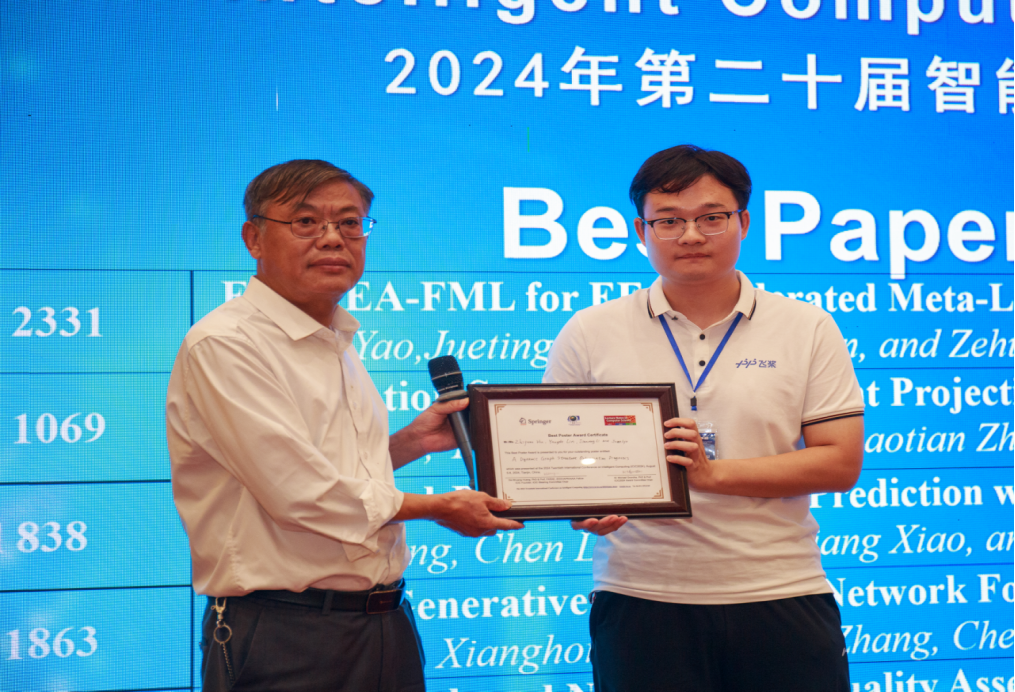
This paper addresses the challenges of processing large-scale and imbalanced datasets in the fields of early fault diagnosis of industrial equipment and academic network analysis, and proposes a Dynamic Graph-Structured Optimization Diagnosis (DG-SOD) model based on graph neural networks. The model has two main innovations: first, it adopts the k-Nearest Neighbor (kNN) algorithm to combine the health status labels of bearings with vibration signal data, constructing a graph structure that reflects the complex relationships between bearing states. Second, it employs an optimization strategy combining Focal Loss and Deep Open Classification (DOC) for graphs to further improve the model's performance in handling imbalanced data, as well as its applicability and accuracy in different fields, creating more possibilities. The DG-SOD model has obvious advantages in dealing with data imbalance and improving the recognition accuracy of minority classes, providing new ideas and frameworks for future industrial equipment management and academic network analysis, and injecting more possibilities into the coordinated innovative development of Tianjin Binhai New Area and the Beijing-Tianjin-Hebei region.
Through this International Conference on Intelligent Computing, the School of Artificial Intelligence of Tianjin University of Science and Technology has demonstrated its outstanding scientific research strength, reflecting the professional level and innovative capabilities of the university and the school. In the future, under the guidance of the university's "Pioneer Plan", the School of Artificial Intelligence will continue to focus on the practical needs of improving the scientific research capabilities of teachers and students, make full use of various carriers such as projects at all levels, academic exchange conferences, forums and competitions inside and outside the university, actively expand channels for the transformation, application and promotion of the school's scientific research achievements, promote the school's scientific research work to a new level, and facilitate the high-quality connotative development of the school.